“Computational Linguistics in Bulgaria” (CLIB) is an international scientific forum dedicated to new approaches and methods in computational linguistics and natural language processing. Particular attention is paid to the application of modern language technologies to languages with limited resources, including Bulgarian, as well as to opportunities for bridging the gap between “large” and “small” languages in the development of language technologies.
The Seventh International Conference “Computational Linguistics in Bulgaria” was held in Sofia from 7 to 10 September 2026. The main conference took place on 8 and 9 September, while practically oriented scientific events – workshops and tutorials – were held on 7 and 10 September.
The scientific programme included research and developments covering a broad range of areas in computational linguistics and natural language processing. These included language resources, models and methods for text processing, applications of language technologies, and new approaches to working with low-resource languages.
Special Session on Semantic Relations, FrameNet and Ontologies
CLIB 2026 also featured a special session dedicated to semantic relations, FrameNet and ontologies. This was the fifth edition of the special session, which was launched in 2018.
Science, Technology and Practical Training
The conference programme included two workshops. CLEAR-TEXT focused on readability and text simplification, while FAIR Language Resources in NLP focused on the management, reuse and long-term preservation of language resources.
Practical tutorials were also offered, including Ollama, No Drama: Step-by-Step Guide of Practical Local AI, dedicated to working with large language models locally, as well as tutorials related to computational linguistics and the security of artificial intelligence systems.
CLIB 2026 provided an opportunity for Bulgarian and international researchers working in one of the most dynamically developing fields of contemporary science to meet and exchange ideas – at the intersection of computational linguistics, computer science, artificial intelligence and language technologies.
The Seventh International Conference “Computational Linguistics in Bulgaria” (CLIB 2026) was organised by the Department of Computational Linguistics at the Institute for Bulgarian Language, Bulgarian Academy of Sciences.
More information about the programme, participants, special sessions and tutorials:
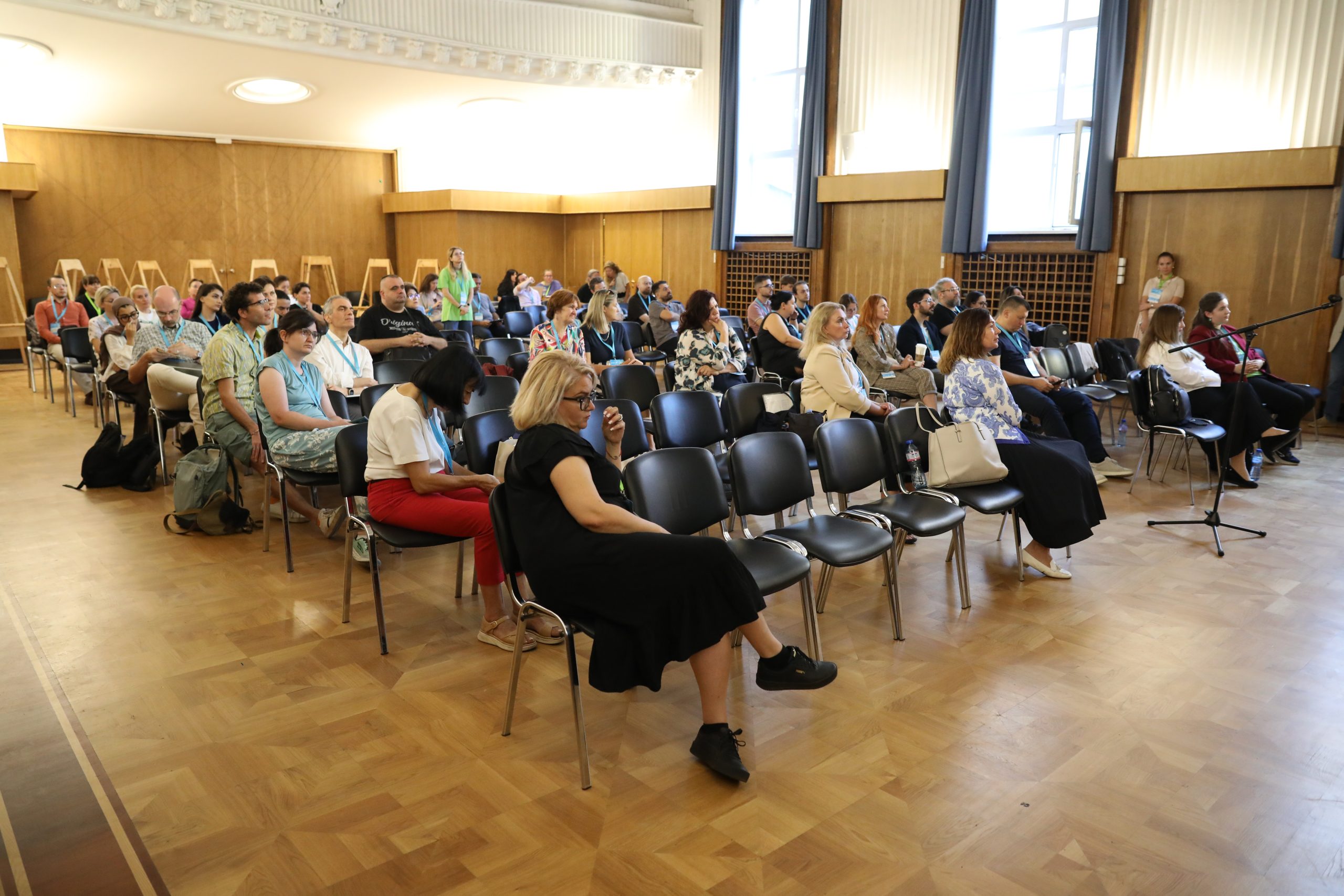
More than 140 participants from Bulgaria and abroad, including representatives of academia, the technology sector and institutions, took part in the Seventh International Scientific Conference “Computational Linguistics in Bulgaria” (CLIB 2026), held in Sofia from 7 to 10 September 2026.
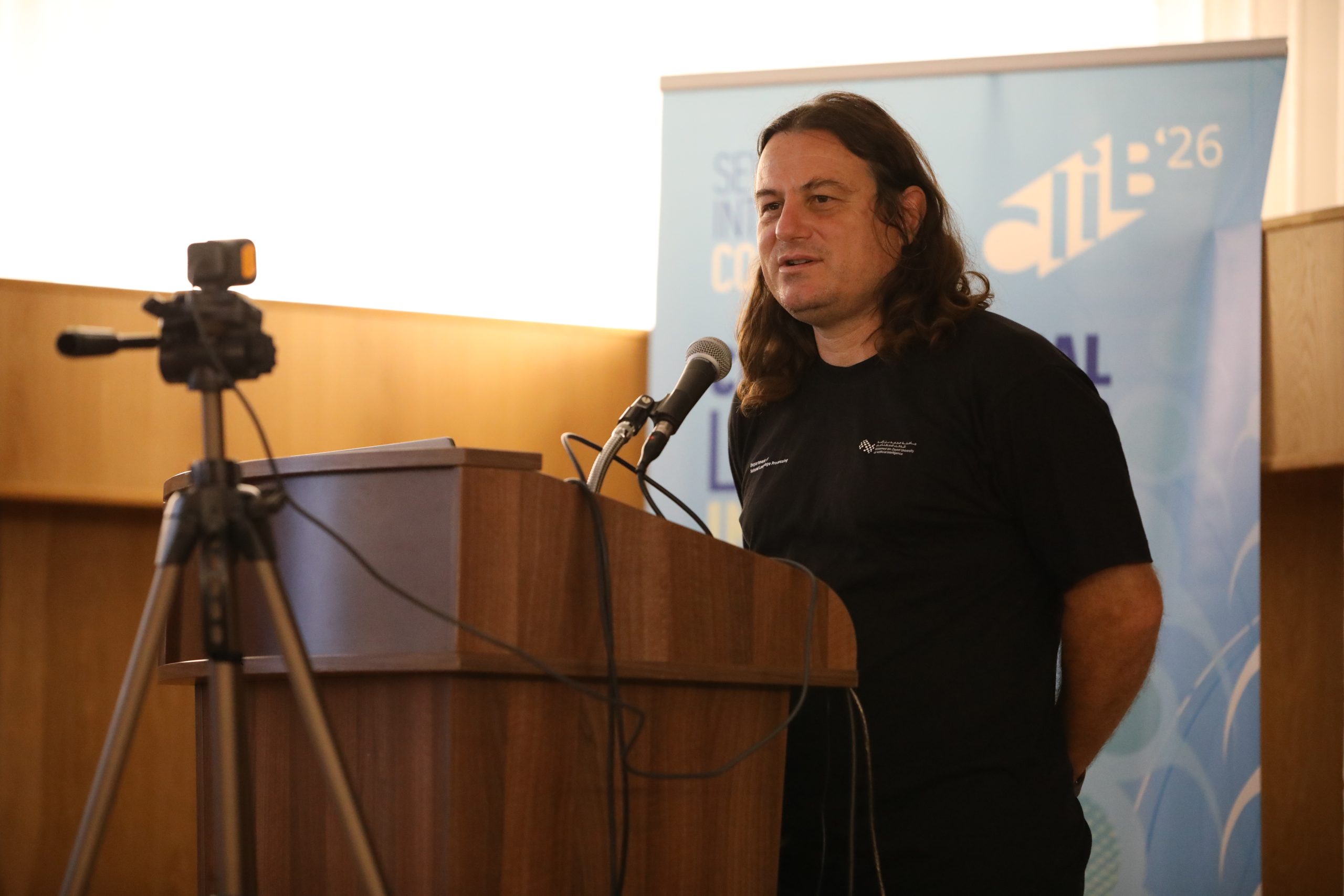
The rich scientific programme included two plenary talks by prominent Bulgarian scholars, 31 oral presentations and 11 posters. Three practical tutorials and two workshops were held on current topics in computational linguistics, natural language processing and artificial intelligence.
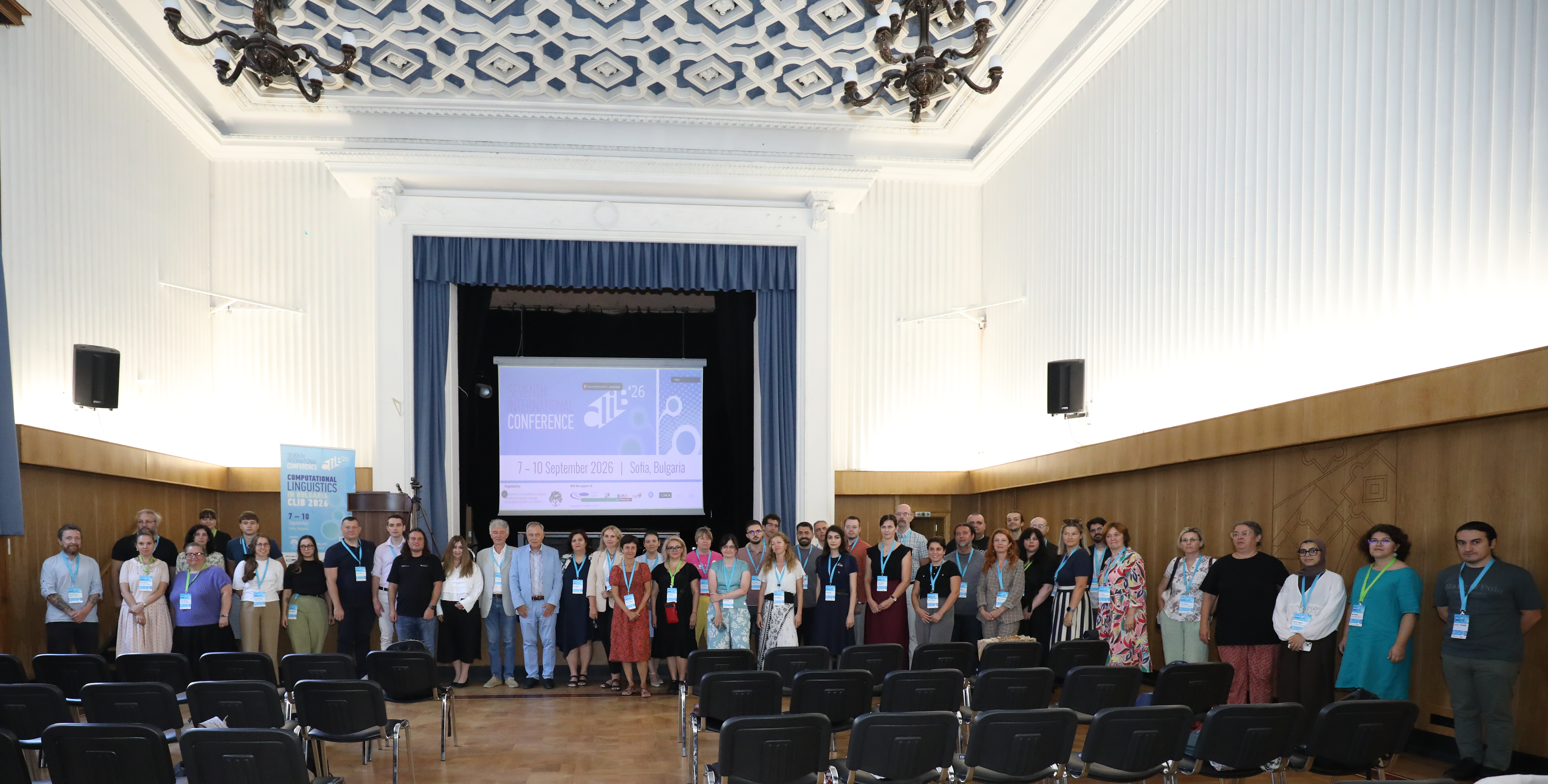
This year’s edition of the conference confirmed its status as an international scientific forum with broad participation, attracting participants from a total of 20 countries. Sixty-eight per cent of all participants were from Bulgaria, while 32% were researchers from foreign institutions in Belgium, Ireland, Spain, Italy, Canada, Latvia, Morocco, the United Arab Emirates, the United Kingdom, Romania, Russia, Slovakia, Slovenia, Serbia, Ukraine, Hungary, Finland, France and the Czech Republic.
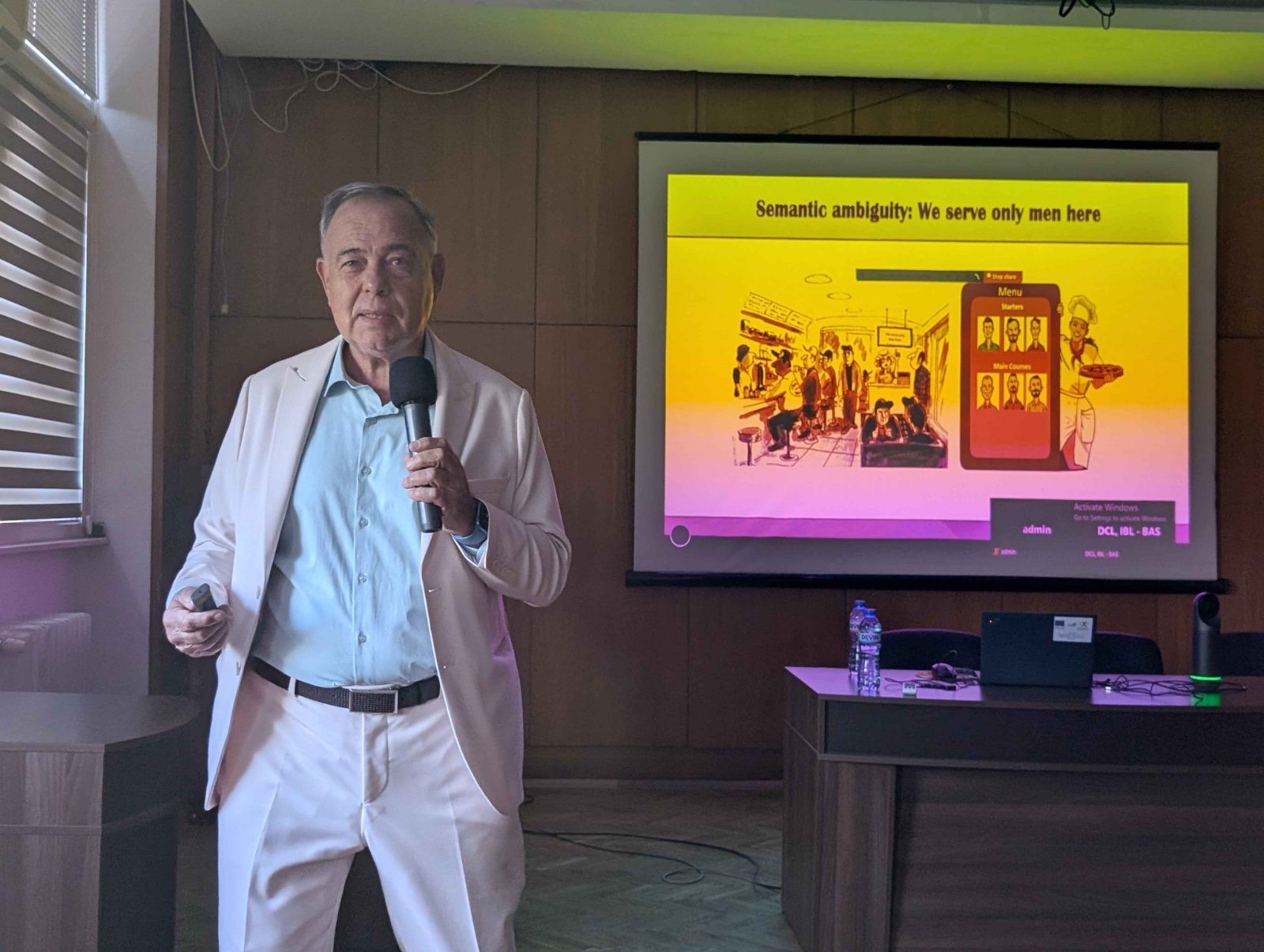
Representatives of 26 international academic institutions took part in the conference: Université de Lorraine (France), Institute for Computational Linguistics “Antonio Zampolli” (Italy), National Research University Higher School of Economics (Russia), Manchester Metropolitan University (United Kingdom), Slovak Academy of Sciences, Pompeu Fabra University (Spain), University of Latvia, University of Szeged (Hungary), Charles University (Czech Republic), Constantine the Philosopher University in Nitra (Slovakia), Institute for Applied Linguistics (Italy), Josef Stefan Institute, Lancaster University (United Kingdom), Lviv Polytechnic National University, Mohamed bin Zayed University of Artificial Intelligence (UAE), Romanian Academy, University of Alicante (Spain), University of Belgrade (Serbia), University of Genoa (Italy), University of Helsinki (Finland), University of Ljubljana (Slovenia), University of Strathclyde (United Kingdom), University of York (United Kingdom), International University of Rabat (Morocco), KU Leuven (Belgium), and Université du Québec en Outaouais (Canada).
Participants from Bulgaria included representatives of institutes of the Bulgarian Academy of Sciences, Sofia University “St. Kliment Ohridski”, New Bulgarian University, Plovdiv University “Paisii Hilendarski”, University of Ruse “Angel Kanchev”, the Big Data for Smart Society Institute (GATE), the Institute for Computer Science, Artificial Intelligence and Technology (INSAIT), as well as other educational and research organisations.
The largest share of participants – 109 people (77.3%) – were representatives of academia. The conference also brought together 18 representatives of industry (12.8%), as well as representatives of the media, institutions and other professional fields.
An important focus was the participation of the next generation of researchers: 26 participants (18.3%) were students and young researchers.
Representatives of 15 companies and organisations also attended the conference: IBM, Identrics, A Data Pro, LERAI, Experian, Sofita Ltd., FOCUS, Stihia.ai, MiTRa Translations, PLAN A, AnalitIQ, XT development, USW Ltd, London Technologies and Mozaika.
The broad range of participants with diverse academic and professional backgrounds and from different institutions contributed to the exchange of ideas, knowledge and experience among specialists working in computational linguistics and its practical applications in language technologies, natural language processing and artificial intelligence.
The conference was supported by: